What Is a Smart City? A Data-Driven Definition for Local Government Professionals
The term "smart city" gets used constantly in urban planning circles, government technology conferences, and federal grant applications. But for the local government professional sitting inside a city department trying to make practical decisions about technology investments, the definition often feels abstract and disconnected from day to day operational reality.
This article cuts through the buzzword and provides a grounded, data-driven definition of what a smart city actually is — with real examples from mid-size American cities that your department can learn from, benchmark against, and realistically emulate.
A Working Definition
A smart city is a municipality that systematically collects data from its physical infrastructure, analyzes that data in real time or near real time, and uses the resulting insights to improve the delivery of public services, allocate resources more efficiently, and make better decisions for residents.
The emphasis on systematic is important. A smart city is not defined by having one impressive technology pilot or a flashy dashboard in the mayor's office. It is defined by the intentional integration of data collection, analysis, and decision making across departments and services — consistently and at scale.
The IMD Smart City Index, which assessed 148 cities worldwide in 2026, defines a smart city as one that strikes a good balance between economic activity, applied technology, environmental concerns, and inclusiveness — with the end goal of facilitating a high quality of life for residents. Notably, the index found that the most advanced urban centers are not necessarily distinguished by visible sensor networks or technological sophistication, but by how effectively they align governance structures, sustainability priorities, and citizen trust. IMD Business School
That definition should resonate with local government professionals. Smart cities are fundamentally about governance and outcomes — not gadgets.
The Four Pillars of a Smart City
Most smart city frameworks organize around four interconnected pillars. Understanding these pillars helps local government departments identify where they already have smart city capabilities and where the gaps are.
1. Connected Infrastructure
The physical foundation of a smart city is connected infrastructure — sensors, meters, cameras, and devices embedded in public assets that continuously collect data and transmit it to centralized platforms.
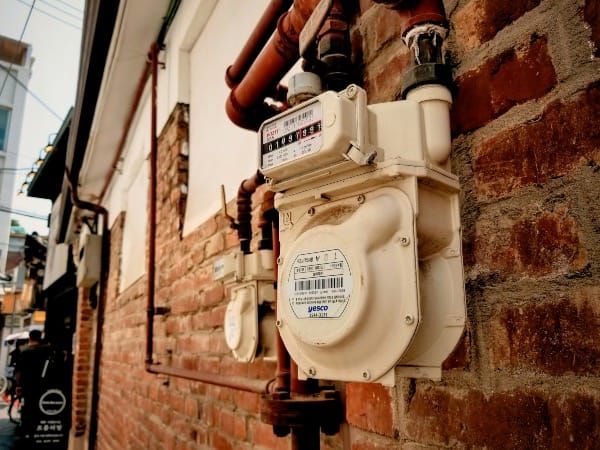
The most accessible entry point for most mid-size cities is smart utility metering. Smart water meters equipped with IoT technology enable remote monitoring, real-time data collection, and automated billing — enhancing operational efficiency and customer service while reducing the labor intensive manual reading process. Water utilities that have deployed Advanced Metering Infrastructure report meaningful operational gains. AMI pilots have achieved over 50% reductions in water loss in documented deployments, and digital transformation data shows energy cost reductions of 15 to 40% when predictive maintenance is combined with real-time monitoring. Global Market InsightsThingsLog
For departments currently running manual meter reading operations, this represents a meaningful and achievable modernization step — not a futuristic concept.
2. Data Integration and Analytics
Collecting data is only valuable if it can be analyzed and acted upon. The second pillar of a smart city is the platform infrastructure that aggregates data from multiple sources — utility systems, call center platforms, work order systems, financial databases — into a unified analytics environment.
This is where cloud based ERP systems play a critical role in the modernization journey. A city migrating from legacy on-premise systems to a cloud based ERP gains the data integration capability that makes cross departmental analytics possible for the first time. Billing data, service request data, and operational performance data that previously lived in separate systems become connectable — enabling the kind of whole-city performance dashboards that define genuinely smart city operations.
3. Real-Time Decision Making
The third pillar is using connected data to make decisions in real time rather than through periodic manual review. Columbus, Ohio equipped over 600 vehicles including buses and emergency vehicles with technology that communicates with traffic signals — when emergency vehicles approach intersections, signals automatically change to green, cutting emergency response times by 15%. HiveMQ
That is real-time decision making built into infrastructure. At a more accessible scale, a local government call center that monitors live abandonment rates and adjusts staffing in response is practicing the same principle — using real time data to make operational decisions as conditions change, rather than reviewing monthly reports after the fact.
4. Citizen-Centered Outcomes
The fourth pillar — and the one most often overlooked in technology-focused smart city conversations — is measurable improvement in outcomes for residents. The most advanced smart cities stand out for how effectively they align governance structures, sustainability priorities, and the cultivation of citizen trust — not for the sophistication of their sensor networks. IMD Business School
Every smart city investment should be evaluated against a clear resident outcome: reduced response times, improved billing accuracy, lower water loss rates, faster complaint resolution. If a technology initiative cannot be tied to a measurable resident benefit, it is a technology project — not a smart city initiative.
If you want a ready-built Excel dashboard tracking these exact KPIs — the Local Government Dashboard Template Pack has you covered at $47.
What Mid-Size Cities Are Actually Doing
The smart city conversation is often dominated by examples from New York, Los Angeles, and San Francisco — cities with budgets and technical capacity that are out of reach for most local government departments. Mid-size cities offer more instructive and replicable models.
Columbus, Ohio
Columbus was chosen as a pilot city for smart mobility and sustainability projects specifically because authorities sought a mid-sized city to accelerate the deployment of technology focused on smart transportation. The city won a $40 million federal Smart City Challenge grant and has since become one of the most documented smart city programs in the country. Tomorrow.City
Smart Columbus closed out 2025 with measurable community impact — including over 2,500 residents graduating from its Digital Skills Hub program, the launch of a Community Information Exchange platform connecting health and human services, and multiple smart mobility projects launched in partnership with Honda through its Central Ohio Living Lab. Smart Columbus
What makes Columbus instructive for mid-size cities is not the scale of investment — few cities can replicate a $40 million federal grant. It is the governance model: a dedicated cross-sector organization bringing together public agencies, private companies, and nonprofit partners around shared outcomes.
Kansas City, Missouri
Kansas City deployed what became one of the most replicated smart city sensor frameworks in North America — starting in 2016 along a 2.2-mile streetcar corridor, installing 240 smart streetlight nodes equipped with environmental sensors. The city's success came from a specific governance decision: requiring all vendors to publish data to a single city-controlled IoT platform. This prevented the vendor data silos that undermine most smart city programs. Build Smart
The lesson for local government departments is practical and immediately applicable: before procuring any smart technology, establish who owns the data, what format it must be delivered in, and how it will integrate with existing systems.
Pittsburgh, Pennsylvania
Pittsburgh's AI-powered SURTRAC traffic management system reduced travel times by over 25%, cut wait times by up to 40%, and lowered emissions by 20% in its pilot phase. Pittsburgh is a mid-size city with aging infrastructure and a constrained budget — a profile that matches the majority of American municipalities. Its success with adaptive traffic signals demonstrates that high-impact smart city results are achievable without massive technology overhauls. StartUs Insights
The Smart City Legislation Landscape in 2026
Local government professionals planning smart city investments should be aware of the current federal policy environment. The Smart Cities and Communities Act of 2025, currently before Congress, explicitly seeks to address the needs of small and medium-sized cities, counties, and Tribal governments — authorizing $100 million per year from 2026 through 2030 for smart city technology demonstrations and grant programs. Congress.gov
This legislation, if enacted, would represent a significant funding opportunity specifically designed for the scale of government that most City Data Intelligence readers work within. Monitoring its progress and understanding the grant eligibility criteria now — before funding becomes available — positions departments to apply quickly and competitively.
Where Most Cities Actually Are
For every Columbus or Kansas City with a documented smart city program, there are thousands of municipalities at a much earlier stage — running pilot programs on smart water meters, migrating to cloud based ERP systems, or building their first real time performance dashboards.
That is not a gap. That is the starting point. In 2025, smart cities are moving beyond isolated pilot projects toward integrated, citywide solutions that enhance quality of life, improve governance, and boost resilience. The cities making that transition are not the ones with the largest budgets — they are the ones that started with a clear outcome in mind, connected their existing data sources, and built incrementally from there. Smartcityss
A water utility deploying smart meters that can be read and shut off remotely is building smart city infrastructure. A city migrating its financial and operational systems to a cloud based platform is building the data integration layer that makes smart city analytics possible. A call center that monitors real time abandonment rates and service levels is practicing smart city operations — using data to make decisions as conditions change rather than after the fact.
The gap between where most mid-size cities are today and what a smart city looks like is smaller than the buzzword suggests. It is largely a gap in data connectivity, governance structure, and analytical capacity — all of which are solvable without eight-figure technology investments.
A Practical Starting Point for Local Government Departments
If your department is beginning a smart city conversation, here is a practical framework for getting started without being overwhelmed by the scope of the concept:
Start with one data source you already have but are not fully using. Most local government departments are sitting on operational data — call logs, work order records, billing transactions — that is never systematically analyzed. Connecting that data to a dashboard and reviewing it regularly is a smart city practice, regardless of what technology you use to do it.
Define your resident outcome before you procure any technology. What specific, measurable improvement in resident experience are you trying to achieve? Faster complaint resolution? Lower water loss rates? Improved billing accuracy? The technology should serve that outcome — not the other way around.
Require data ownership in every vendor contract. Whatever technology you deploy, ensure that your city owns the data it generates, that it is delivered in open, standard formats, and that no vendor can monetize resident data without explicit permission. This is the governance decision that separates smart city programs that scale from ones that create expensive data silos.
Final Thoughts
A smart city is not a destination — it is a direction. It is the intentional choice to use data more systematically, to connect systems that currently operate in isolation, and to measure the impact of government services on the residents who depend on them.
Mid-size cities across the country are making that choice right now — not with unlimited budgets, but with clear outcomes, practical governance structures, and a willingness to start with what they have. The smart meter pilot, the cloud ERP migration, the real time call center dashboard — these are not peripheral to the smart city conversation. They are the smart city conversation, happening at the scale that most local government professionals actually work within.
These templates are a practical starting point for departments beginning their data journey.
Ready to build dashboards for your department?
The Local Government Dashboard Template Pack includes three Excel dashboards built specifically for city analysts and utility managers — call center performance, utility billing, and public works service requests. Each template comes pre-loaded with fictional data so you can see it working immediately.