How Cities Are Using AI to Reduce Water Infrastructure Costs
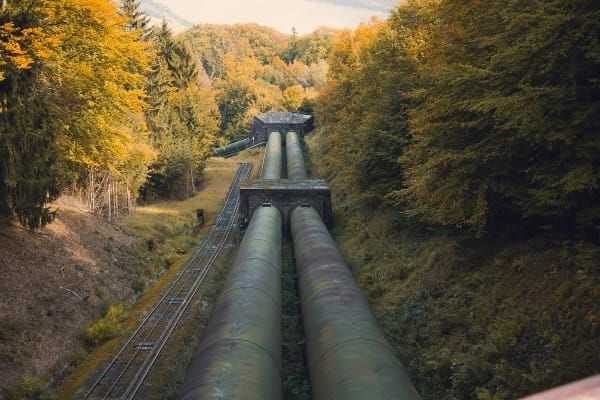
The numbers behind America's water infrastructure challenge are sobering. U.S. drinking water infrastructure received a C-grade from the American Society of Civil Engineers in 2025, with 6 billion gallons of treated water lost daily to leaks across a pipe network where many cast-iron mains are 100 years old or more and well beyond their original design life. The EPA estimates a $36 billion annual funding gap through 2040 to maintain and improve U.S. drinking water infrastructure alone.
For local government water utility managers, those national statistics translate into daily operational reality: aging pumps that fail without warning, main breaks that cost millions in emergency repairs, maintenance schedules built on fixed intervals rather than actual asset condition, and capital budgets that cannot possibly fund all the replacement work that needs to happen.
Artificial intelligence is changing this equation — not by replacing human expertise or requiring enterprise budgets, but by making the data that utilities already collect from their systems more actionable. This article focuses specifically on how mid-size water utilities are applying AI to reduce infrastructure costs through three accessible pathways: predictive maintenance, workflow automation, and customer service analytics.
The Problem With Reactive Maintenance
Before examining what AI can do, it is worth understanding the operational problem it solves.
Most water utilities manage infrastructure reactively — responding to failures after they occur rather than anticipating them before they happen. A pump station runs until a bearing fails. A water main carries flow until a fracture occurs. A treatment plant chemical dosing system operates on a fixed schedule regardless of actual influent conditions.
The traditional approach to water infrastructure management has been largely reactive. A pipe breaks, crews are dispatched, the leak is located — an often long and tricky process with current methods — and the problem is eventually fixed. The costs of this approach extend well beyond the emergency repair itself. A 36-inch cast iron main failure in a mid-size municipality generated $3.8 million in costs — road reconstruction, sewer cross-contamination remediation, business interruption claims, and temporary water service for thousands of residents — in an incident that lasted 11 days. Emergency repair spending accounts for the majority of unplanned infrastructure costs, and AI predictive maintenance programs have demonstrated a 40% average reduction in emergency repair spending across pilot programs.
Preventive maintenance — maintaining equipment on fixed schedules regardless of actual condition — is an improvement over purely reactive management, but it creates its own inefficiencies. Components are replaced before they need to be, consuming maintenance budget unnecessarily. Failures still occur between inspection intervals when degradation accelerates unexpectedly. And fixed schedules do not adapt to actual operating conditions — a pump running at higher-than-normal loads degrades faster than the maintenance calendar assumes.
Rather than relying on fixed maintenance schedules or reacting to equipment failures after they occur, utilities are now using machine learning, industrial IoT sensors, and predictive analytics to identify potential failures days or even weeks before they happen. That shift — from reactive and preventive to predictive — is where the meaningful cost reduction occurs.
AI Application 1: Predictive Maintenance for Water Infrastructure
Predictive maintenance uses sensor data combined with machine learning models to detect early signs of equipment degradation and predict failure probability before failure occurs. For a water utility, the equipment that benefits most from this approach includes pump stations, treatment plant motors and blowers, pressure regulation equipment, and water mains.
How it works in practice:
IoT sensors stream vibration, temperature, pressure, and flow data continuously from pump stations and treatment equipment. Machine learning models compare real-time readings against historical baselines and flag deviations before they escalate into failures. When a threshold is crossed, the system instantly creates a prioritized work order and notifies the right technician — without manual intervention required.
A pump bearing that is beginning to fail produces a characteristic vibration signature weeks before it reaches the failure point visible to a maintenance technician during a scheduled inspection. A water main under stress from soil movement, temperature change, or pressure fluctuation produces acoustic and pressure signals that differ from baseline. AI models trained on historical failure data can recognize these patterns and generate alerts that give maintenance teams time to intervene during scheduled work windows rather than at 2 AM during an emergency.
The cost impact:
A mid-size municipality with a $2 billion infrastructure portfolio typically saves $3-8 million annually from a predictive maintenance program — against an investment of $400,000 to $900,000 including IoT sensors, AI software, and asset management system integration. The primary savings come from four sources: reduced emergency repair spending, extended asset useful life through early-stage intervention, optimized capital budget allocation that directs limited replacement funds to highest-consequence assets first, and reduced liability exposure from prevented failures.
Every year of additional service life extracted from a major pump station or treatment plant through predictive maintenance directly reduces the capital replacement burden on ratepayers and municipal budgets. For a utility already facing a widening gap between infrastructure replacement needs and available capital, extending asset life by even two to three years across a pump station portfolio represents a significant deferral of capital expenditure.
The workforce dimension:
Thirty percent of the water utility workforce is eligible for retirement, taking decades of asset knowledge with them. Experienced operators develop intuitive knowledge of how their specific equipment behaves — the sound a particular pump makes when it is running optimally versus when something is beginning to go wrong. AI predictive maintenance systems can capture and institutionalize that knowledge in data models, creating a form of organizational memory that persists beyond any individual operator's tenure.
AI Application 2: Workflow Automation for Billing and Customer Service
Predictive maintenance addresses infrastructure on the physical side of utility operations. Workflow automation addresses the operational side — the processes that handle resident interactions, billing functions, and service requests.
For a utility billing department, the highest-volume repetitive tasks are precisely where AI automation delivers the clearest return. Payment arrangement processing, account status updates, service connection and disconnection scheduling, and basic billing inquiry resolution all follow predictable decision trees that AI systems can navigate without human involvement for the majority of cases.
Automated call triage and self-service:
The average utility billing call center handles a significant volume of routine inquiries — account balance checks, payment confirmation, due date verification, and basic service status questions. These calls consume representative time that could be directed toward complex disputes, hardship applications, and situations that genuinely require human judgment and empathy.
AI-powered interactive voice response systems designed around actual call reason data — rather than generic menu structures — can resolve routine inquiries automatically and route complex calls to the most qualified available representative. A resident calling to confirm their payment was received does not need to speak with a billing specialist. An AI system connected to the billing platform can confirm payment status, provide the account balance, and end the interaction in under 60 seconds.
The operational impact is measurable in the two call center KPIs discussed in our guide to the most important utility billing KPIs: service level — the percentage of calls answered within 20 seconds — improves when AI deflects routine volume, and abandonment rate decreases because remaining callers reach representatives faster. Both improvements happen without adding staff.
Automated work order generation:
Service connection and disconnection workflows — one of the highest-volume field operation types in a water utility — involve a predictable sequence of steps: billing trigger, account verification, work order creation, crew assignment, field execution, and status update. Most of these steps can be automated with AI-assisted workflow tools connected to the billing system and work order management platform.
A billing system that automatically generates a disconnection work order when an account meets the eligible criteria — two consecutive missed bills, no active payment arrangement, no hardship status, disconnect notice period elapsed — and routes it to the appropriate field crew without manual dispatcher intervention reduces both the administrative burden on billing staff and the time between eligibility and execution. As explored in our utility billing complaint reduction guide, faster and more consistent workflow execution reduces the complaint volume generated by residents who receive inconsistent or delayed service responses.
AI Application 3: Sentiment Analysis on Customer Interactions
The third AI application is the most analytically sophisticated and the one with the most direct connection to resident experience measurement — applying natural language processing to customer call transcriptions to extract sentiment patterns at scale.
Utility billing call centers generate thousands of customer interactions per month. Each one contains information about resident experience that structured data — call reason codes, resolution status, handle time — captures only partially. The tone of a call, the specific concerns a resident expresses, the emotional intensity of interactions about disconnection notices or billing disputes — these qualitative signals are invisible in standard operational metrics but highly predictive of resident satisfaction and complaint escalation.
AI sentiment analysis tools applied to call transcriptions can identify patterns that aggregate metrics miss. A billing cycle that produces a spike in negative sentiment calls in the week following issuance may indicate a rate change was poorly communicated, a billing error affected a specific account segment, or a system change produced unexpected results. Identifying that pattern from sentiment data gives billing management the ability to investigate and correct the underlying issue before it generates formal complaints, media inquiries, or council attention.
The operational dashboard implication is significant. A sentiment score trend line — tracked weekly alongside service level, abandonment rate, and collection rate — adds a qualitative resident experience dimension to a dashboard that would otherwise show only operational and financial metrics. As discussed in our guide to smart city data platforms, sentiment analysis is one of the most accessible AI entry points for local government departments because it builds on infrastructure — call recordings and transcription — that many departments already have.
A Practical Framework for Evaluating AI Infrastructure Investments
For water utility managers considering AI investments, the proliferation of available platforms and the marketing language surrounding them can make evaluation difficult. This six-question framework cuts through the noise and focuses evaluation on the factors that actually determine whether an AI investment delivers value for a mid-size municipality.
Question 1: What specific operational problem does this solve?
Every AI investment should start with a clearly defined problem — not a technology interest. "We want to use AI" is not a sufficient justification. "We spent $2.1 million on emergency pump repairs last year and want to reduce that by 30%" is. Define the problem quantitatively before evaluating any solution.
Question 2: What data does it require and do we have it?
AI models are only as good as the data they train on. A predictive maintenance system requires historical sensor data from your equipment — if your pump stations do not have vibration and temperature sensors, the AI has nothing to learn from. A sentiment analysis system requires call recordings or transcripts. Inventory your existing data before committing to a platform that assumes data you do not have.
Question 3: Does it integrate with our existing systems?
Implementation costs for AI water management systems include system integration, data preparation, operator training, and potential infrastructure upgrades — costs that often equal or exceed software licensing fees. A predictive maintenance platform that requires replacing your existing SCADA system to function is a fundamentally different investment than one that layers over your current infrastructure. Require demonstrated integration with your specific ERP, SCADA, and asset management platforms before committing.
Question 4: What is the realistic payback period?
Establish clear metrics for measuring AI impact — whether through reduced chemical costs, prevented equipment failures, energy savings, or labor efficiency gains — before deployment, not after. A predictive maintenance program that costs $500,000 to implement and reduces emergency repair spending by $400,000 per year has a 15-month payback period. That calculation needs to be made conservatively — based on documented performance in comparable utilities, not vendor projections — before council or leadership approval.
Question 5: What does ongoing operation require?
AI systems require ongoing maintenance — model retraining as equipment ages and operating conditions change, software updates, sensor calibration, and technical support. A system that requires a dedicated data scientist to maintain is a different operational commitment than one your existing maintenance staff can manage with vendor support. Be explicit about the ongoing staffing and skill requirements before implementation.
Question 6: How will we measure success?
Define your success metrics before you deploy. For predictive maintenance: reduction in emergency repair spending, reduction in unplanned downtime, and extension of mean time between failures. For workflow automation: reduction in manual processing time, improvement in service level and abandonment rate, and reduction in work order cycle time. For sentiment analysis: improvement in sentiment score trend, reduction in formal complaint rate, and reduction in escalations. Metrics defined before deployment create accountability and make ROI documentation straightforward.
Where to Start: A Phased Approach for Mid-Size Utilities
Not every municipality can implement all three AI applications simultaneously. A phased approach that sequences investments by ROI certainty and implementation complexity gives utilities a manageable path toward AI-enabled operations.
Phase 1 — Workflow Automation (Months 1-6)
Start with billing workflow automation — specifically automated work order generation for service connections and disconnections, and AI-assisted call triage for routine inquiries. This phase requires the least new infrastructure, builds on systems you already have, and delivers measurable results in service level and administrative efficiency within the first billing cycle.
Phase 2 — Sentiment Analysis (Months 4-12)
Layer sentiment analysis onto your existing call recording infrastructure. Most modern call center platforms support transcription and basic sentiment scoring natively or through low-cost add-ons. This phase requires minimal new technology investment and can be operational within weeks of enabling the transcription feature.
Phase 3 — Predictive Maintenance (Months 6-24)
Predictive maintenance requires the most significant infrastructure investment — IoT sensors where they do not already exist, integration with your asset management system, and model training on historical failure data. Sequence this phase after you have completed the cloud migration or ERP modernization that gives your maintenance data the accessibility AI models require. Most utilities see their first predictive alert within seven days of go-live once the sensor and data integration infrastructure is in place.
This sequencing is intentional. Phases 1 and 2 deliver measurable cost savings and operational improvements that can be documented and presented to leadership as evidence supporting the larger Phase 3 investment. Building the business case from demonstrated results is significantly more effective than requesting capital for a predictive maintenance program before any AI applications have been implemented.
Tracking AI Investment Outcomes on Your Dashboard
AI infrastructure investments require outcome tracking to demonstrate value, justify continued investment, and identify where performance is falling short of projections.
The metrics to add to your utility operations dashboard when implementing AI include: emergency repair spending per month (trending down under predictive maintenance), mean time between failures for major equipment, call self-service resolution rate (trending up under AI triage), manual work order processing time (trending down under automation), and sentiment score trend (improving under targeted intervention).
As covered in our guide to building KPI dashboards for local government, adding new metrics to an existing dashboard structure is straightforward once your raw data sources are connected. The dashboard template in our Local Government Dashboard Template Pack provides the Excel framework for tracking operational metrics across billing and public works functions — the AI outcome metrics above slot naturally into that structure as additional calculated fields.
Final Thoughts
2026 marks a tipping point where smart, connected water infrastructure is becoming an industry standard rather than an exception — and this shift is not limited to large cities. Mid-size utilities with aging infrastructure, constrained capital budgets, and a shrinking experienced workforce are precisely the organizations that stand to gain the most from AI-enabled operations.
The barriers are lower than they appear. Workflow automation builds on systems you already have. Sentiment analysis requires enabling a feature in your existing call platform. Predictive maintenance scales from a single pump station pilot to a network-wide program as confidence and budget allow.
The framework above — six questions evaluated honestly before any vendor commitment — protects against the most common implementation failures and focuses investment on the applications with the clearest, most documentable ROI for your specific operational context.
The data your utility already generates from meters, pumps, billing systems, and call centers is the raw material. AI is the analytical layer that makes it actionable at a scale and speed that human review alone cannot match.
Ready to track your utility's operational performance?
The Local Government Dashboard Template Pack includes a fully built Utility Billing Performance Dashboard in Excel — pre-loaded with fictional data, all formulas verified, and a setup guide included. Connect your billing system export and your dashboard is live in under 30 minutes.