How Cities Use Data to Reduce Utility Billing Complaints

Utility billing complaints are one of the most consistent sources of resident dissatisfaction in local government. Every billing cycle brings a predictable wave of calls — disputed charges, requests for adjustments, questions about disconnection notices, and inquiries about city errors on accounts. For most utility departments, these complaints feel like an unavoidable cost of doing business.
In reality, they are a data problem — and like most data problems, they are solvable when the right information is collected, analyzed, and acted upon systematically.
This article examines how local government utility departments are using data analytics to understand the root causes of billing complaints, reduce call volumes, improve resolution times, and deliver a measurably better experience for residents.
Understanding the Complaint Landscape
Before data can reduce billing complaints it has to categorize them. Most utility billing departments handle four primary categories of resident complaints:
Billing disputes are the most common — residents who believe their bill is incorrect, unusually high, or inconsistent with prior billing cycles. These complaints are often driven by meter reading errors, rate changes that were not clearly communicated, or seasonal consumption patterns the resident did not anticipate.
Adjustment requests cover situations where residents are seeking a formal review of their account — a leak adjustment, a payment arrangement, or a credit for a service interruption. These are often legitimate requests that require staff time and system access to resolve but follow a predictable process once initiated.
City errors represent cases where the utility department made a verifiable mistake — an incorrect meter read, a billing system error, or a misapplied payment. Tracking this category separately from resident disputes is critical because it isolates process failures within the department itself rather than attributing all complaints to resident confusion.
Disconnection delay requests come from residents who have received a service interruption notice and are seeking additional time to pay or an arrangement to avoid disconnection. These calls are typically high urgency and emotionally charged — and they tend to spike predictably around billing cycle dates and seasonal hardship periods.
Each of these categories has a different resolution pathway, a different average handle time, and a different data signature. Treating them as a single undifferentiated complaint volume obscures the operational intelligence that is available when they are tracked separately.
The Escalation Chain and Why Data Matters at Every Level
In a local government utility department, complaint resolution follows a defined escalation pathway. Customer service representatives handle the majority of incoming complaints at the first point of contact. Unresolved or complex cases escalate to supervisors, then to managers, then to directors — and in the most serious cases, to elected officials including the mayor's office.
Every step up that escalation chain represents a cost — in staff time, in management attention, and in resident satisfaction. A complaint that reaches the director level has typically already consumed three or four times the resources of one resolved at the CSR level.
Data analytics changes this equation by making escalation patterns visible. When complaint categories, resolution times, and escalation rates are tracked systematically, patterns emerge that are not apparent from individual case handling. A spike in billing disputes following a rate change reveals a communication gap. A cluster of city error complaints concentrated in a specific geographic area suggests a meter reading or system issue. A seasonal surge in disconnection delay requests signals the need for proactive outreach before the billing cycle rather than reactive call handling after it.
The departments that use this data effectively reduce escalations not by managing complaints better after they arrive — but by addressing the conditions that generate complaints before residents pick up the phone.
Three Ways Data Analytics Reduces Billing Complaints
1. Call Reason Analysis
The foundation of a data driven complaint reduction strategy is knowing exactly why residents are calling. This sounds obvious but most utility departments do not systematically categorize call reasons in a way that enables meaningful analysis.
When call reason data is captured consistently — through agent disposition codes, IVR selections, or CRM tagging — it becomes possible to identify which complaint categories are driving volume, which are trending upward, and which correlate with specific billing events or operational changes.
Call reason analysis answers questions that gut instinct cannot. Are billing disputes concentrated in a specific rate class or account type? Are adjustment requests spiking after a particular billing cycle? Are city error complaints increasing — suggesting a process or system issue that needs investigation? The answers to these questions drive targeted interventions rather than broad operational responses that address symptoms rather than causes.
2. Staffing Optimization Through Call Volume Pattern Analysis
One of the most immediate and measurable applications of billing analytics is staffing optimization. Call volume in a utility billing department is not random — it follows predictable patterns tied to billing cycles, payment due dates, disconnection notice schedules, and even time of day.
Analyzing call volume by half hour interval reveals peak demand periods with a precision that daily or weekly totals cannot provide. A department that knows it receives 40% of its daily call volume between 9 and 11 AM on the Tuesday following a billing run can staff accordingly — scheduling additional representatives during peak windows and reducing overstaffing during consistently low volume periods.
This is not theoretical. Departments that have implemented data driven staffing models consistently report improvements in service level — the percentage of calls answered within a target timeframe — without increasing headcount. The data does not create more staff. It ensures the staff that exists is in the right place at the right time.
3. Self-Service Deflection for Simple Requests
Perhaps the most strategically significant application of billing complaint data is identifying which requests do not need a live representative at all.
When call reason analysis reveals that a substantial portion of incoming volume consists of simple, repeatable inquiries — account balance checks, payment confirmation, due date verification, basic disconnection status questions — it creates a clear case for investing in self-service channels that handle those requests automatically.
This data driven insight has driven meaningful operational changes in forward thinking utility departments. Interactive Voice Response menus redesigned around actual call reason data rather than assumptions about what residents need give callers faster paths to resolution for simple inquiries. Triage models that route straightforward requests to a general customer service team — reserving specialized billing staff for complex disputes and escalations — reduce handle times and improve resolution rates simultaneously. Chatbot development projects, increasingly common in mid-size utility departments, extend self-service capability to digital channels and create the possibility of 24-hour resident support without proportional staffing increases.
The key distinction is that these investments are justified and designed by data — not by technology enthusiasm. Departments that implement self-service channels based on actual call reason analysis know exactly which request types to automate, what resolution rate to target, and how to measure success. Departments that implement them without that analytical foundation frequently discover that residents route around the self-service options and call anyway — because the channel was not designed around what residents actually need.
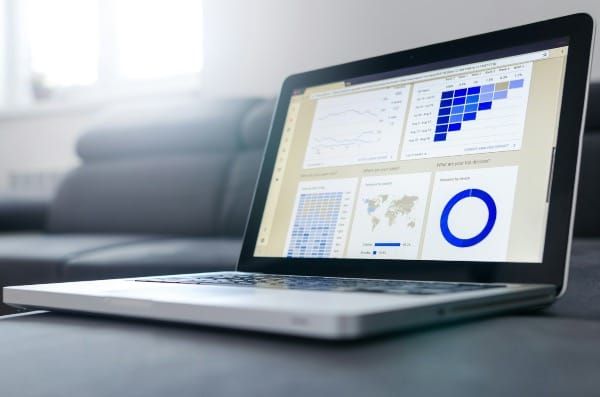
Building a Billing Complaint Dashboard
The operational improvements described above require visibility — and visibility requires a dashboard that makes complaint data accessible to the people responsible for acting on it.
An effective utility billing complaint dashboard tracks a small number of high impact metrics that reflect both volume and quality of complaint resolution:
Complaint volume by category gives supervisors and managers a daily picture of what is driving call volume and whether any category is trending in an unexpected direction.
First contact resolution rate measures the percentage of complaints resolved at the CSR level without escalation. This is the single most important efficiency metric in a complaint management operation — and one of the most powerful levers for reducing management burden.
Average handle time by complaint category reveals which complaint types are consuming disproportionate staff time and may benefit from process improvement, better knowledge base resources, or self-service deflection.
Escalation rate by complaint category identifies which types of complaints are most likely to move up the chain — and therefore which categories represent the highest priority for root cause analysis and process improvement.
Resolution time trend tracks whether complaints are being resolved faster or slower over time — a leading indicator of operational health that aggregate satisfaction scores often miss.
These metrics do not require sophisticated technology to implement. A consistent data entry process, a well structured call logging system, and a PowerBI dashboard connected to your CRM or call platform export can make all of them visible within a standard local government technology stack.
From Reactive to Proactive
The shift from reactive complaint handling to proactive complaint prevention is the ultimate objective of a data driven utility billing operation. Reactive departments respond to complaints. Proactive departments analyze complaint patterns to identify and address the upstream conditions — billing errors, communication gaps, system failures, staffing mismatches — before they generate resident calls.
This transition does not happen overnight and it does not require a technology overhaul. It requires consistent data collection, a commitment to acting on what the data reveals, and leadership that understands the operational value of treating complaint data as a strategic asset rather than an unavoidable byproduct of billing operations.
The departments making this transition are not uniformly large or well funded. They are the ones that decided to look at their complaint data systematically — and then did something with what they found.
Final Thoughts
Utility billing complaints are not random. They are patterned, predictable, and in large part preventable — when departments invest in understanding them analytically rather than managing them reactively.
The tools required are not exotic. Call reason categorization, volume pattern analysis, and a well designed complaint dashboard built on data your department is already collecting are sufficient to drive meaningful reductions in complaint volume, escalation rates, and resolution times.
The barrier is rarely technology. It is the organizational decision to treat complaint data as information worth analyzing — and to act on what that analysis reveals.
The billing complaint dashboard described in this article is included in the template pack.
Ready to build dashboards for your department?
The Local Government Dashboard Template Pack includes three Excel dashboards built specifically for city analysts and utility managers — call center performance, utility billing, and public works service requests. Each template comes pre-loaded with fictional data so you can see it working immediately.